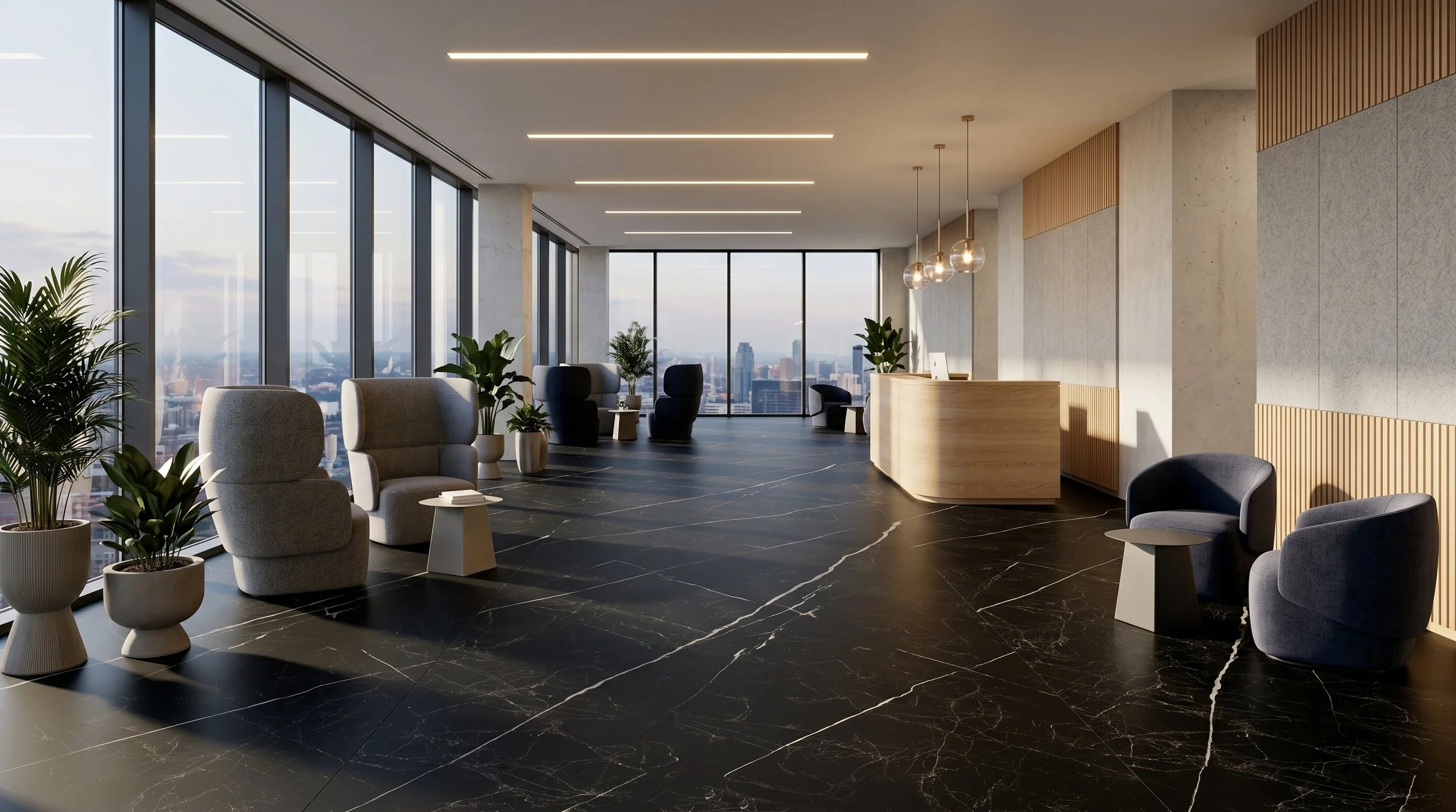
Architectural Slabs for High-Traffic Commercial Spaces: Durability, Scratch Resistance, and Maintenance
Commercial high-traffic environments require flooring materials that offer exceptional durability, easy maintenance, and long-term visual appeal. This data-driven technical guide explores the performance advantages of using large-format commercial porcelain slabs in retail, hospitality, and corporate office spaces. It examines the vitrification process that yields an exceptionally dense, nearly impervious glass-ceramic matrix with a water absorption rate under 0.05% and a high flexural strength exceeding 45nm²
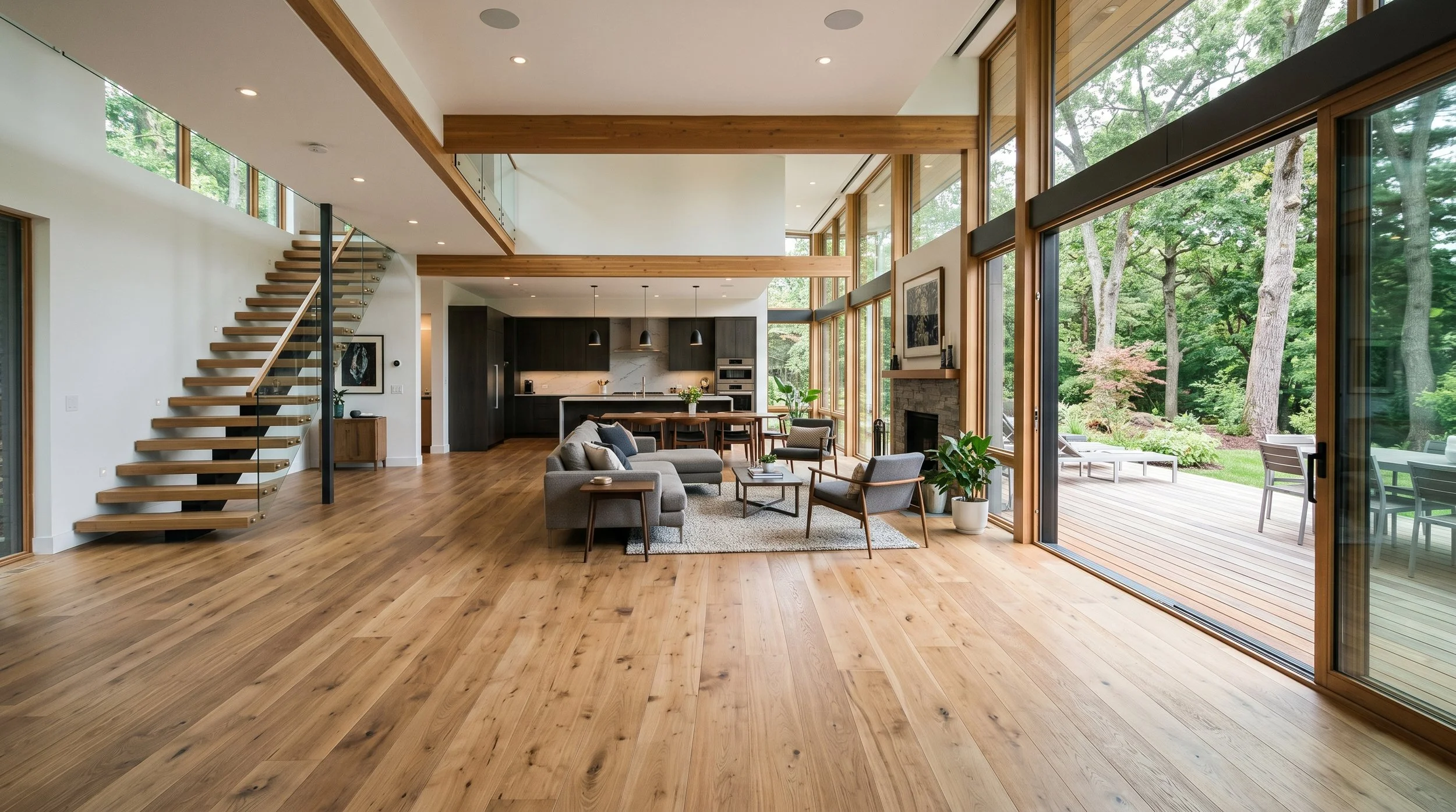
Moisture Mitigation for Wood Flooring: Concrete Slab Preparation and Vapor Barrier Solutions
Installing hardwood flooring over concrete slabs presents significant technical challenges due to the natural movement of moisture and vapor emissions. This comprehensive guide provides a practical reference for builders and installers on subfloor preparation and moisture mitigation. It explores the material science behind common wood flooring failures—such as cupping, crowning, and buckling—and outlines standard testing methods like ASTM F1869 (Calcium Chloride) and ASTM F2170 (In-Situ Relative Humidity Probes).
The manual details critical preparation protocols for concrete substrates, including laitance removal and achieving appropriate Concrete Surface Profiles (CSP 2 to 3). Finally, it evaluates modern vapor barrier options—including sheet membranes, two-part reactive epoxies, and integrated 3-in-1 adhesives—providing clear blueprints for executing stable, long-lasting hardwood installations over problematic concrete subfloors.
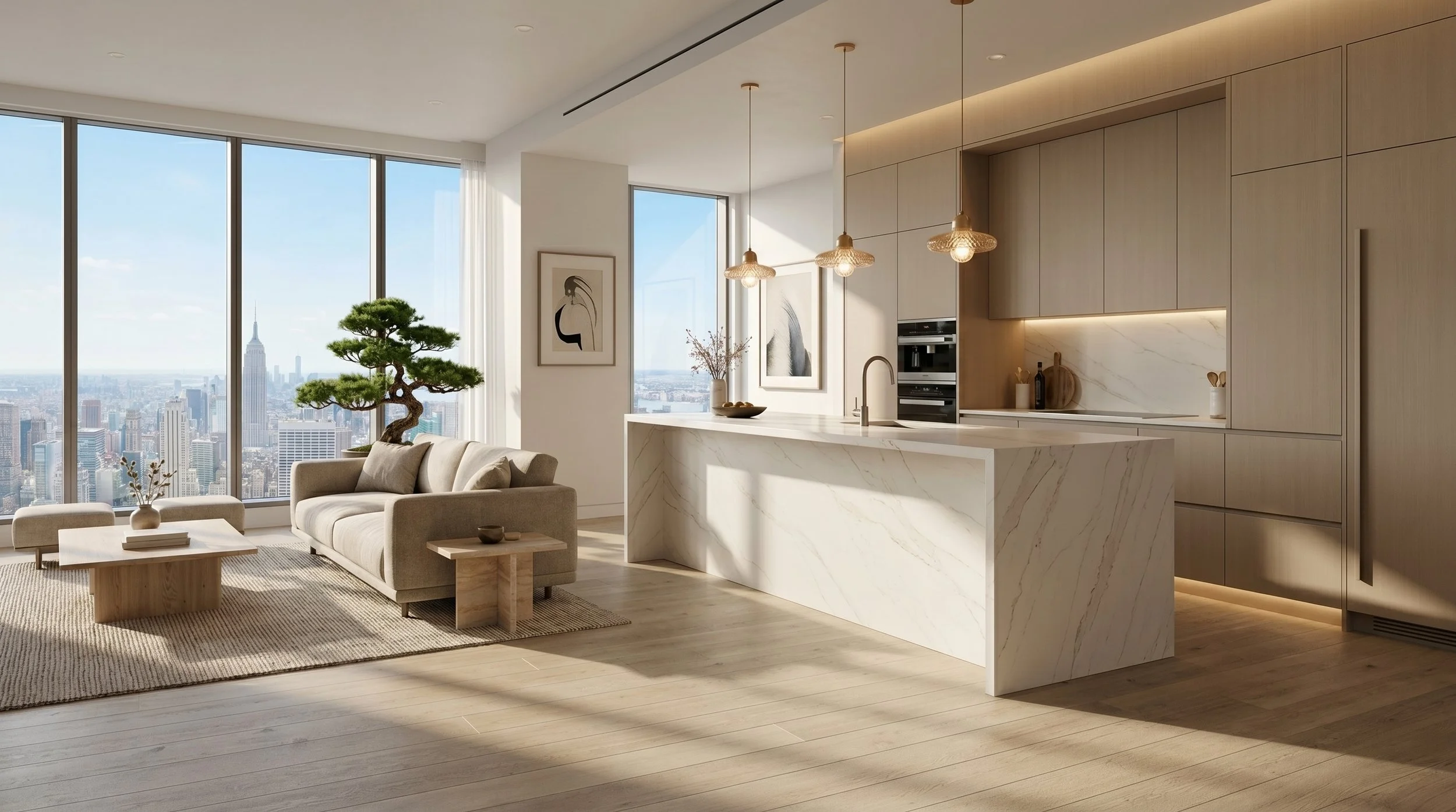
The Zero-Joint Kitchen: Integrating Porcelain Slabs for Sinks, Backsplashes, and Waterfalls
The "Zero-Joint Kitchen" represents the pinnacle of modern luxury design, utilizing large-format porcelain slabs to create a seamless, monolithic environment where countertops, sinks, backsplashes, and waterfalls appear carved from a single block of stone. This technical guide outlines the precise fabrication and installation methodologies required to successfully execute this design. It details critical material selection metrics across 6mm, 12mm, and 20mm slabs, and explores advanced 45-degree miter cutting parameters and color-matched structural epoxies. By addressing the structural engineering behind porcelain integrated sinks, digital vein mapping for waterfall edge installations, and stress-isolation techniques for full-height backsplashes, this manual provides designers and fabricators with the technical blueprint needed to prevent material failure and achieve invisible, long-lasting seamless installations.
The Ultimate Guide to Finishes: Oil, Water-Based, UV-Cured, and Polyurethane for Wood Flooring
Selecting the right wood flooring finish is a critical decision that dictates a floor’s durability, visual style, maintenance schedule, and impact on indoor air quality. This comprehensive guide provides a deep technical analysis comparing the four dominant finishing technologies of 2026: Oil-Based Polyurethane, Water-Based Polyurethane, Natural Penetrating Oils, and Site-Applied UV-Cured Finishes. The article explores the physical split between film-forming barriers and open-pore penetrating methods, detailing how modern 2K water-based cross-linking and instant UV photo-polymerization work to protect timber. By analyzing the practical differences across the sheen spectrum—including the popular matte vs satin finish debate—and addressing the vital need for low-VOC, GreenGuard Gold-certified coatings, this manual provides designers, homeowners, and installers with a complete blueprint for choosing the perfect finish for their lifestyle and architectural needs.
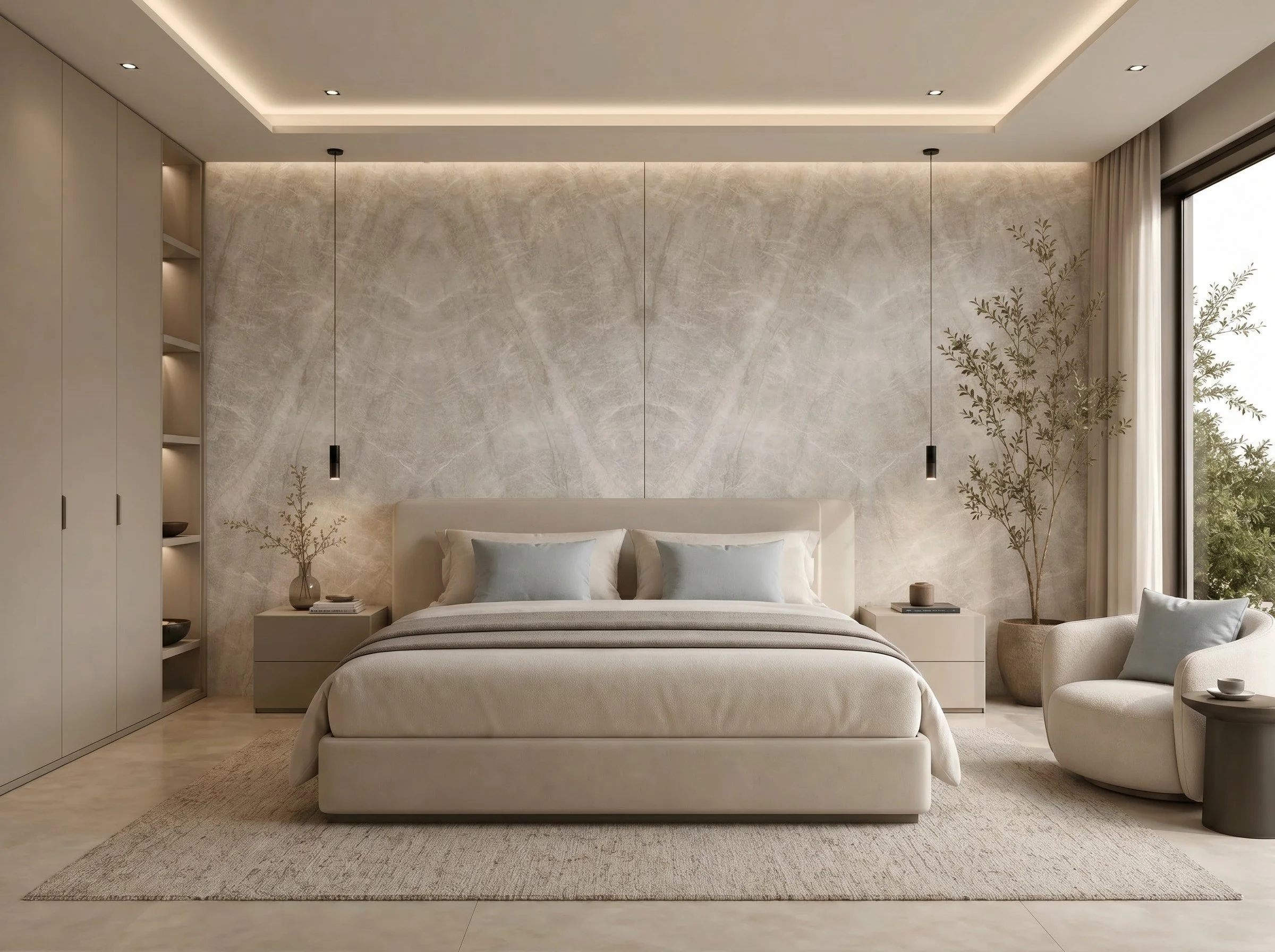
Digital Porcelain vs. Natural Stone: Can You Tell the Difference?
Driven by massive breakthroughs in high-definition tile printing and through-body veining, modern digital porcelain slabs have evolved to replicate rare natural stones so perfectly that even design professionals are regularly fooled. This comprehensive guide details how technologies like 1000+ DPI inkjet jetting, ink-sinking texturing, and three-dimensional mineral distribution allow porcelain to mirror rare stones like Taj Mahal Quartzite and Arabescato Marble with absolute visual and tactile fidelity. The article outlines why engineered porcelain stands out as a highly sustainable, non-porous alternative to destructive quarry mining—providing homeowners with a durable surface that is immune to acid etching, staining, and cracking, without compromising on luxury aesthetics.
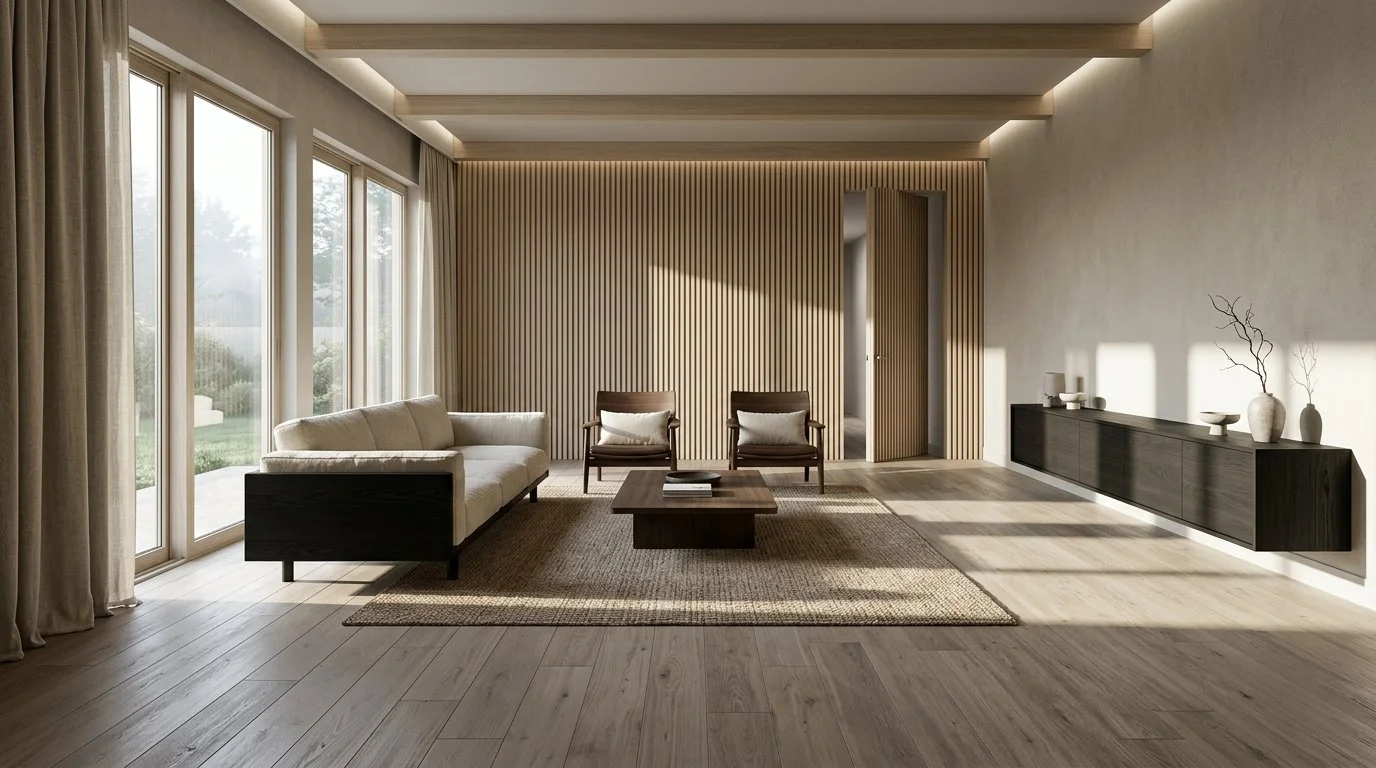
The "Warm Minimalist" Palette: Honey, Amber, and Raw Oak Hardwood Flooring
The 2026 luxury design landscape embraces the "Warm Minimalist" palette featuring honey, amber, and raw oak hardwood. This shift answers a growing demand for interiors that feel organic, grounded, and tranquil rather than cold or clinical. This article explains how designers utilize wide-plank European white oak to lay the visual foundation for Japandi and Organic Modern aesthetics.
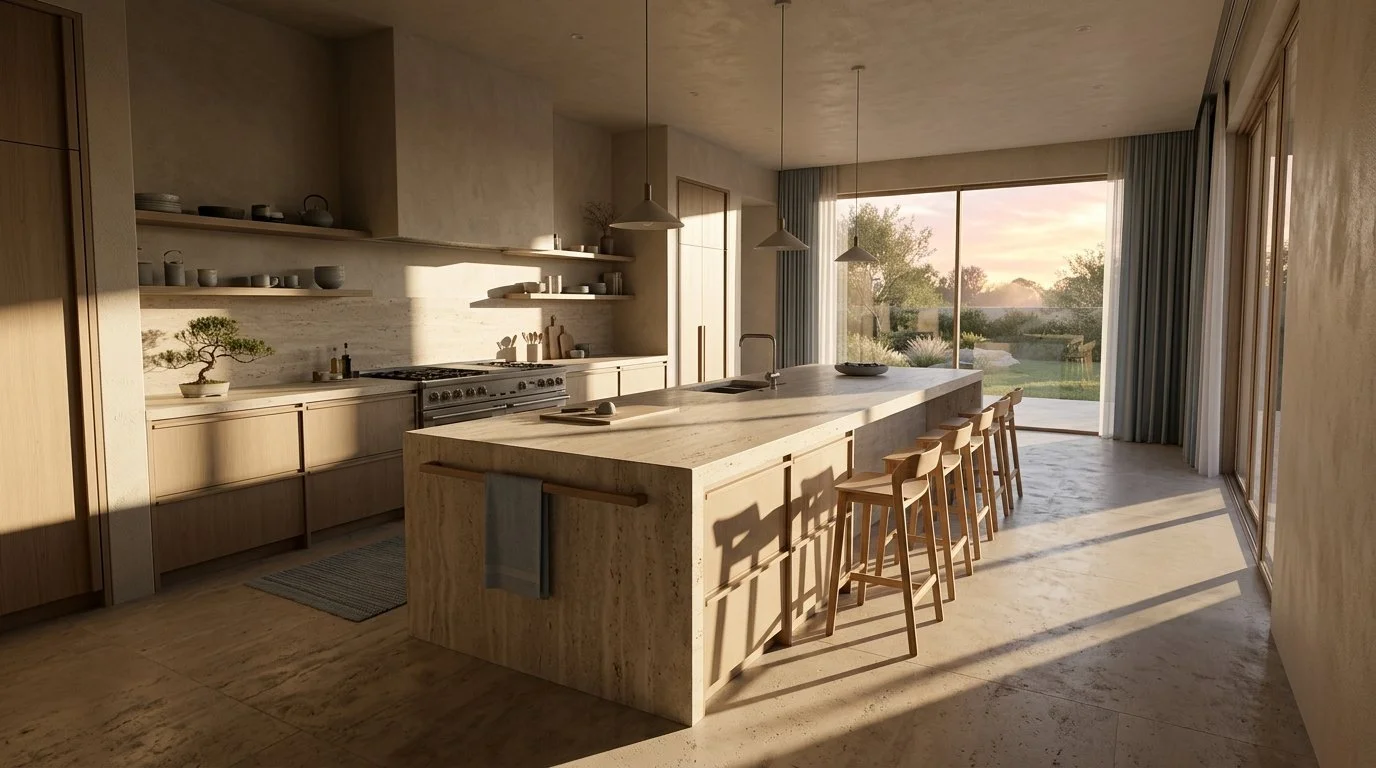
Quiet Luxury: Why Matte & Honed Finishes are Replacing High Gloss
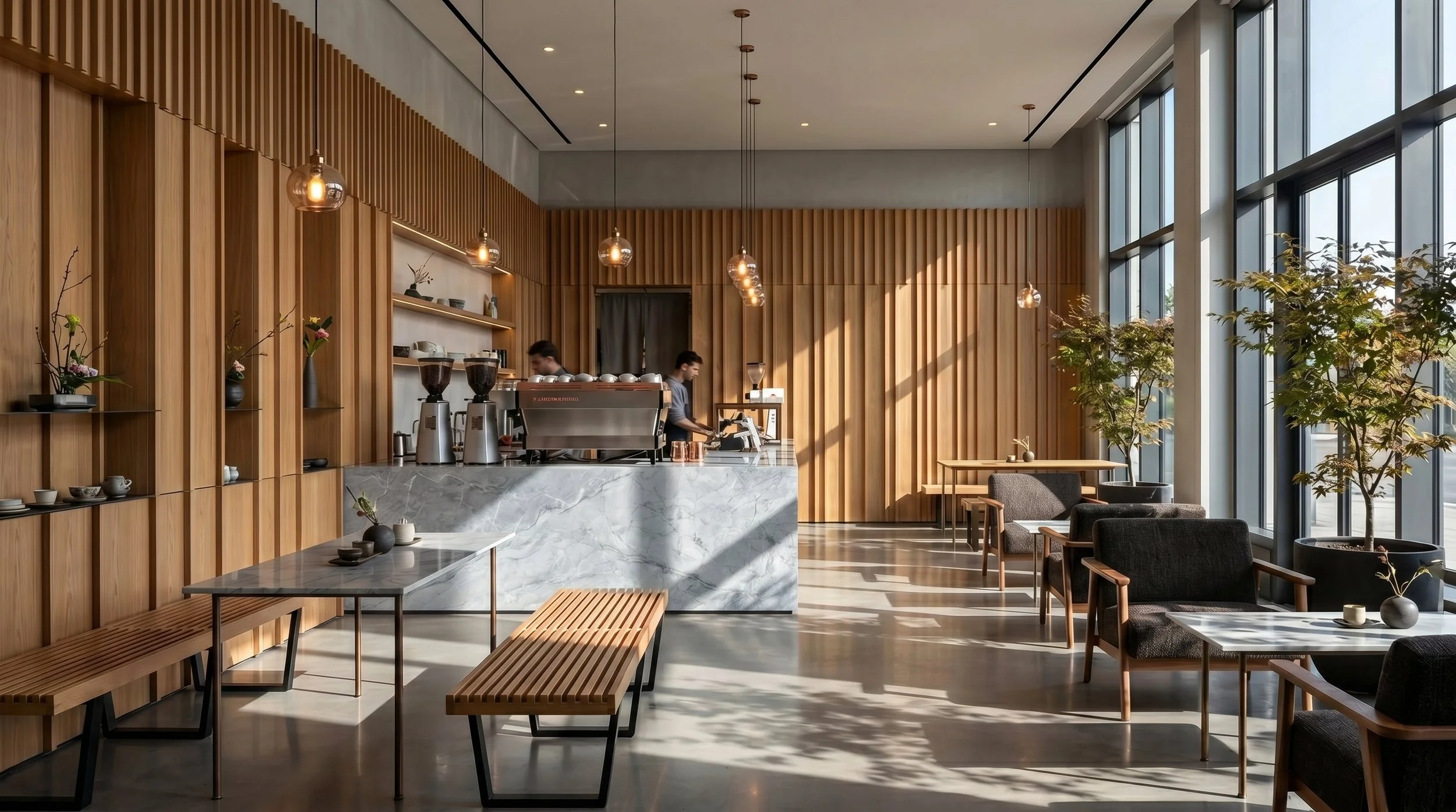
Premium interior design has shifted away from high-gloss surfaces toward matte and honed finishes. Once praised for their shine, polished surfaces are now increasingly viewed as "too clinical" and visually exhausting due to harsh glare, high-contrast reflections, and a tendency to magnify fingerprints and dust. This article analyzes how honed and matte surfaces use diffuse reflection to create a soft, ambient glow that highlights the natural beauty and veining of stone.
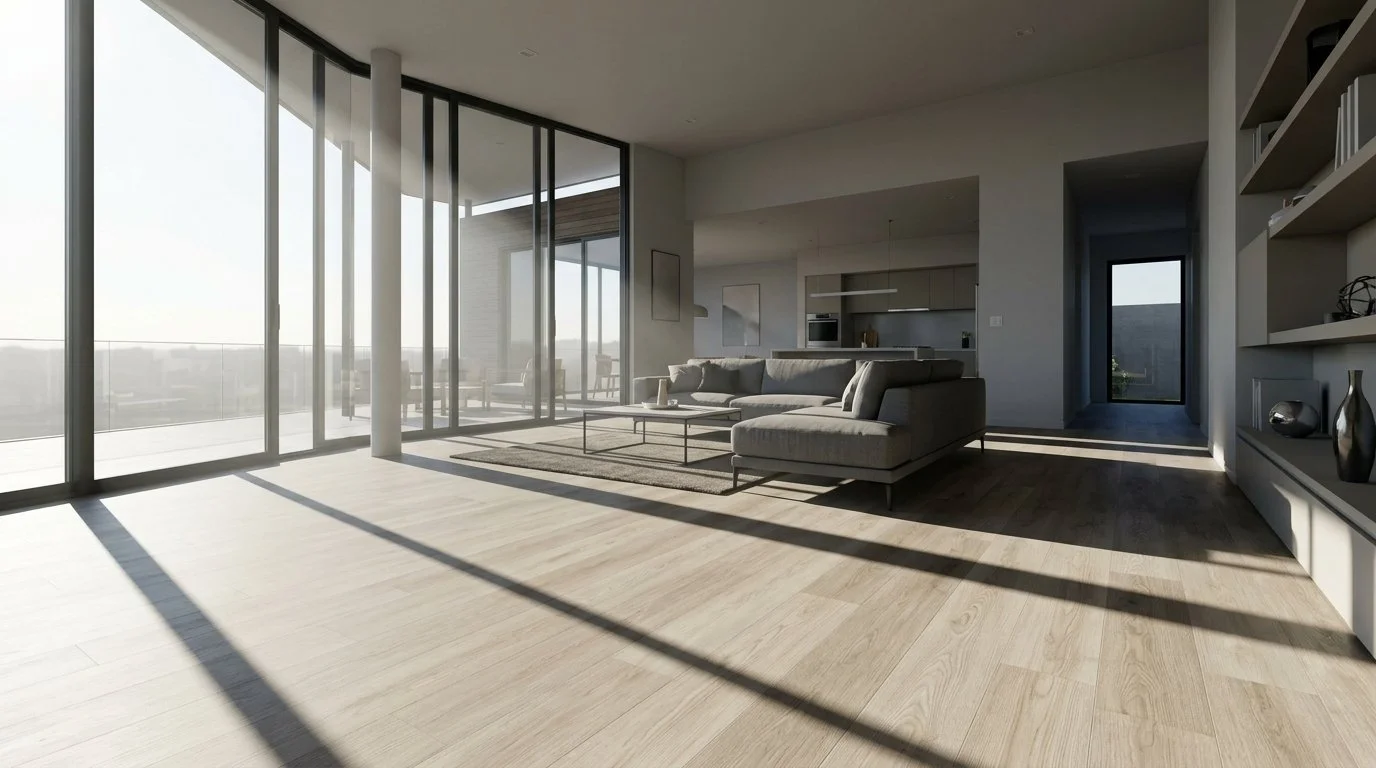
Beyond PVC: The Rise of Eco-Friendly Rigid Core Luxury Vinyl Flooring
Driven by the 2026 "Healthy Home" movement, luxury interior design in Toronto has shifted focus toward sustainability and superior indoor air quality. Highlighting how next-generation Stone Plastic Composite (SPC) have replaced traditional, high-VOC vinyl. These modern floors eliminate the synthetic smell and harmful off-gassing while providing a 100% waterproof, radiant-heat-compatible, and visually authentic alternative to hardwood—perfectly suited for the volatile Canadian climate.
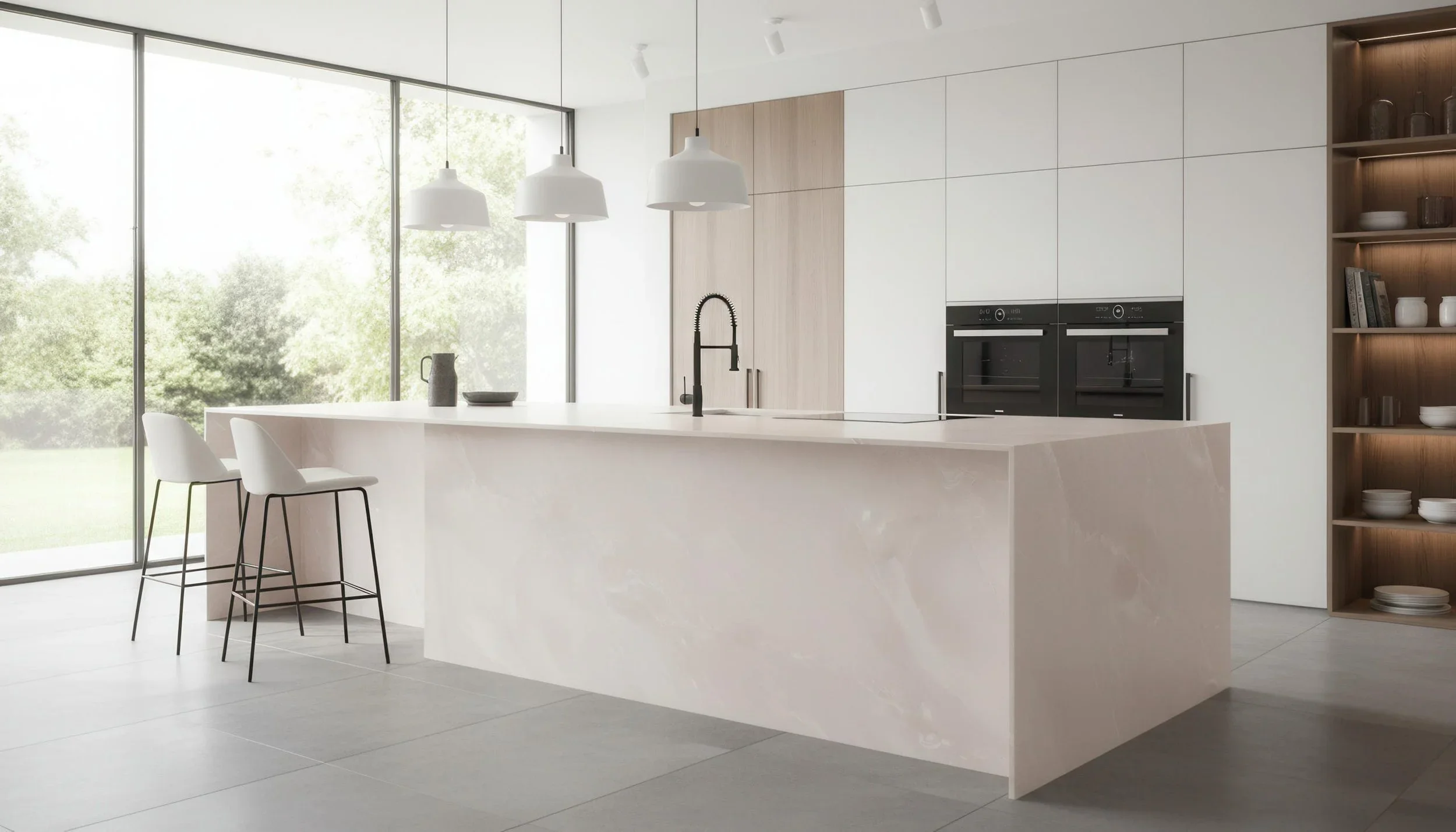
Quiet Luxury: Why Matte & Honed Finishes are Replacing High Gloss in 2026
Is high-gloss becoming a thing of the past? In 2026, the 'Quiet Luxury' movement is taking over the kitchen, replacing reflective surfaces with the organic, tactile feel of Matte and Honed Porcelain. Discover why Toronto’s top designers are choosing 'Visual Silence' to manage lighting glare and create a grounded, sanctuary-like atmosphere. Explore the maintenance realities and aesthetic advantages of the non-reflective revolution.
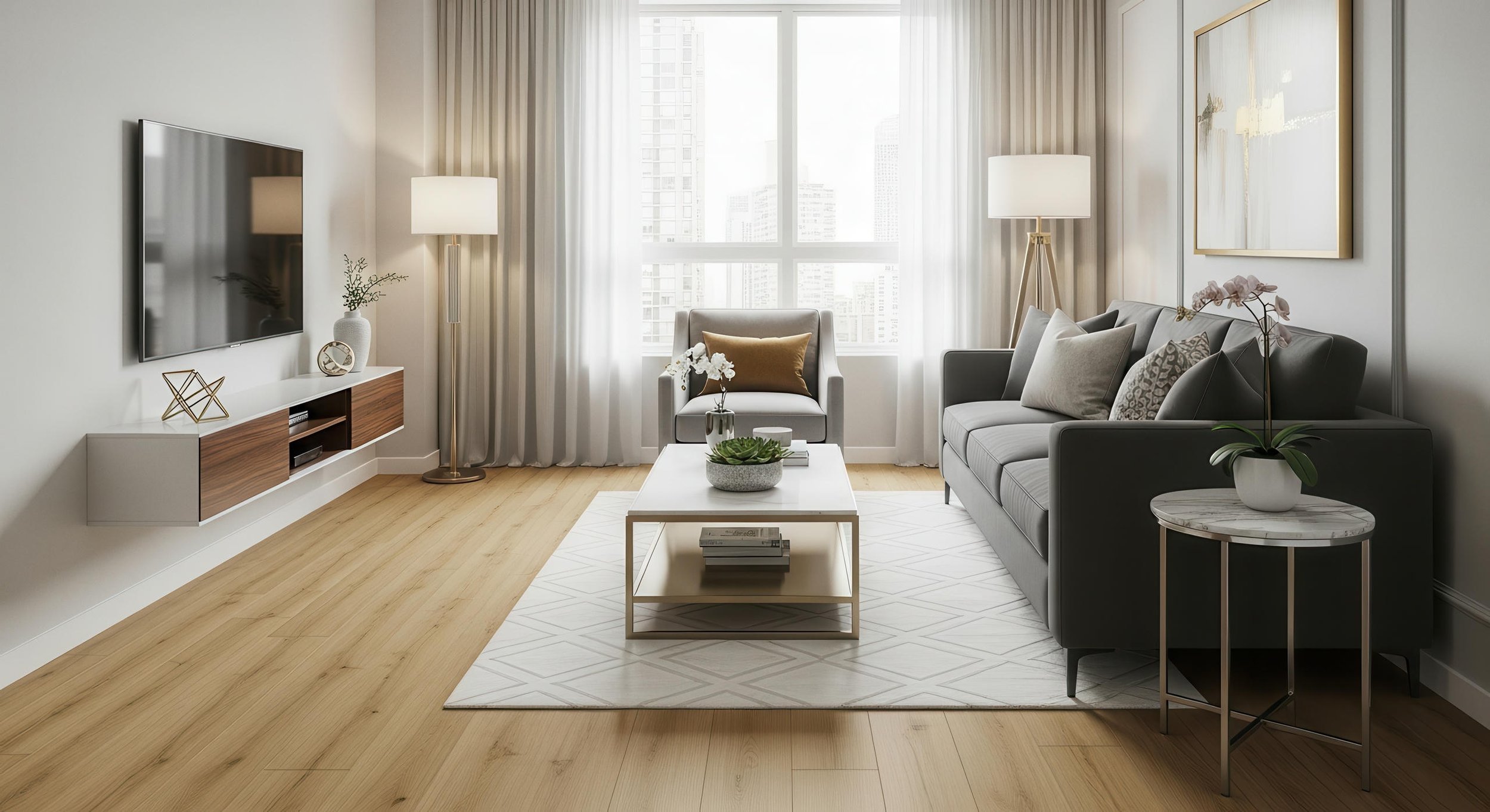
The 2026 Laminate Revolution: Why EIR Technology is Changing High-End Design
In 2026, the 'plastic' stigma is officially dead, replaced by a high-tech Renaissance. Discover the EIR (Embossed-in-Register) revolution—a breakthrough in 3D texture mapping that makes modern floors indistinguishable from natural oak. From AC5 scratch-resistance to high-density acoustics, learn why Toronto’s top designers are choosing CIERO’s masterfully engineered laminate for multi-million dollar projects.
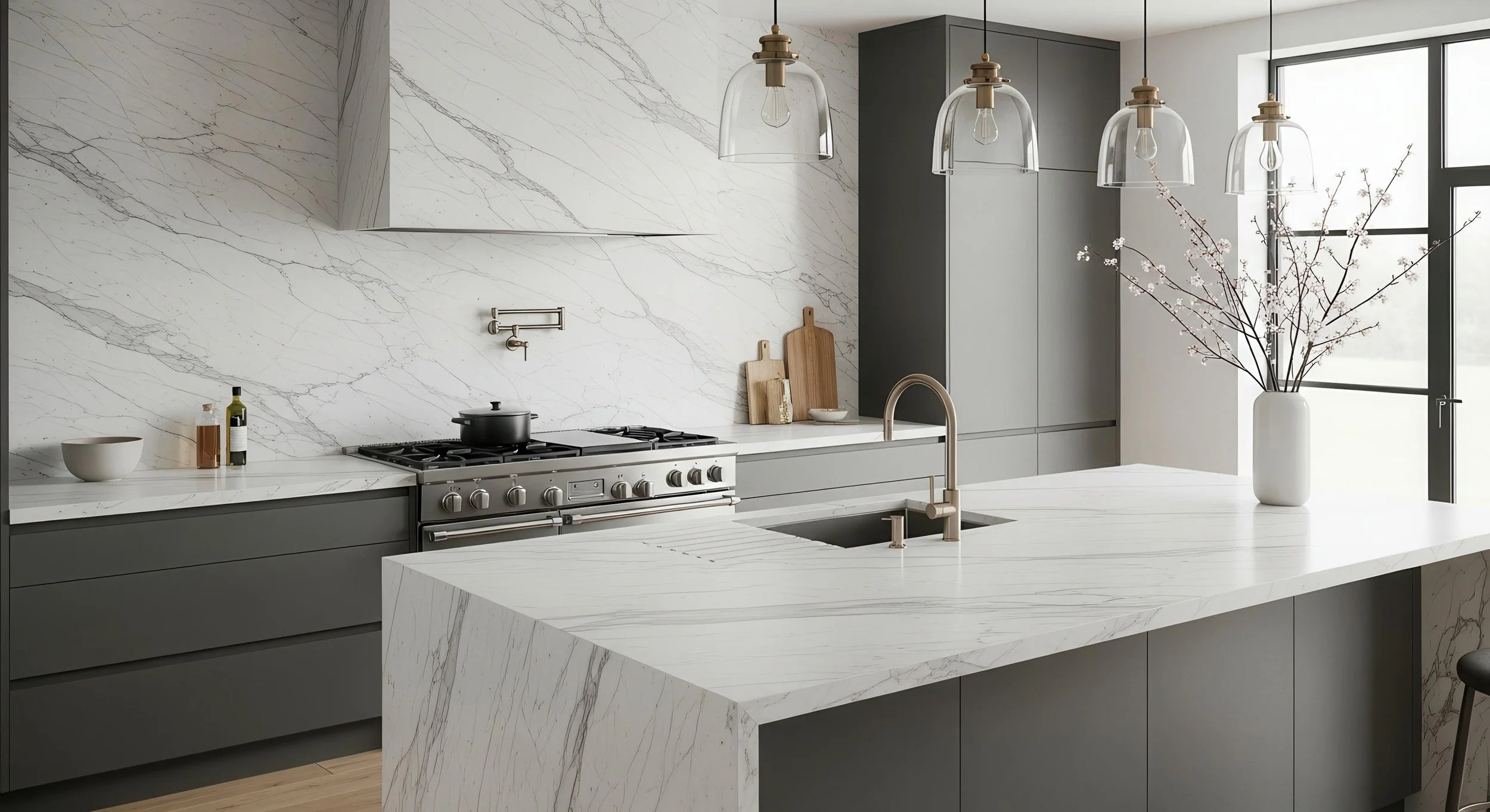
The Art of the Full-Slab Backsplash: Why Continuity is the Ultimate 2026 Kitchen Trend
The kitchen backsplash is evolving from a utility surface into an architectural focal point. In this guide, CIERO INC explores the technical superiority of large-format porcelain slabs over traditional tile. From eliminating microbial growth in grout lines to managing the thermal stress of high-BTU ranges, we break down why the full-height slab is the new standard for luxury developments in the GTA.
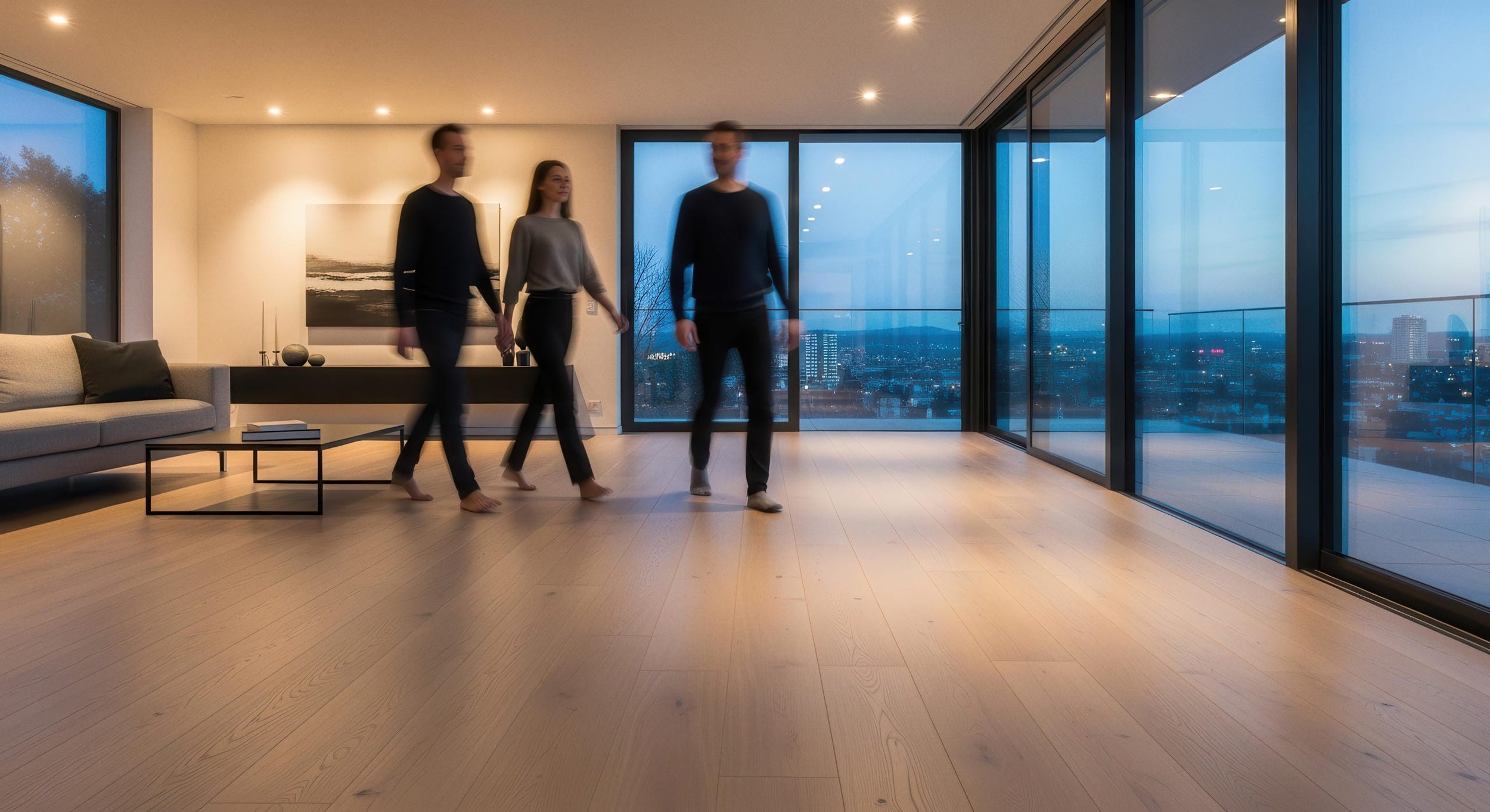
The Toronto Radiant Heat Guide: Why Engineered Wood is the Ultimate Choice for GTA Homes
Transform your GTA home into a winter sanctuary. Our comprehensive Toronto Radiant Heat Guide debunks the myth that you can’t have wood floors with in-floor heating. Discover why CIERO’s premium multi-ply engineered hardwood is the superior choice for Vaughan and Toronto’s extreme climate swings, and learn the professional installation secrets that ensure your luxury floors stay stable, warm, and beautiful for decades.
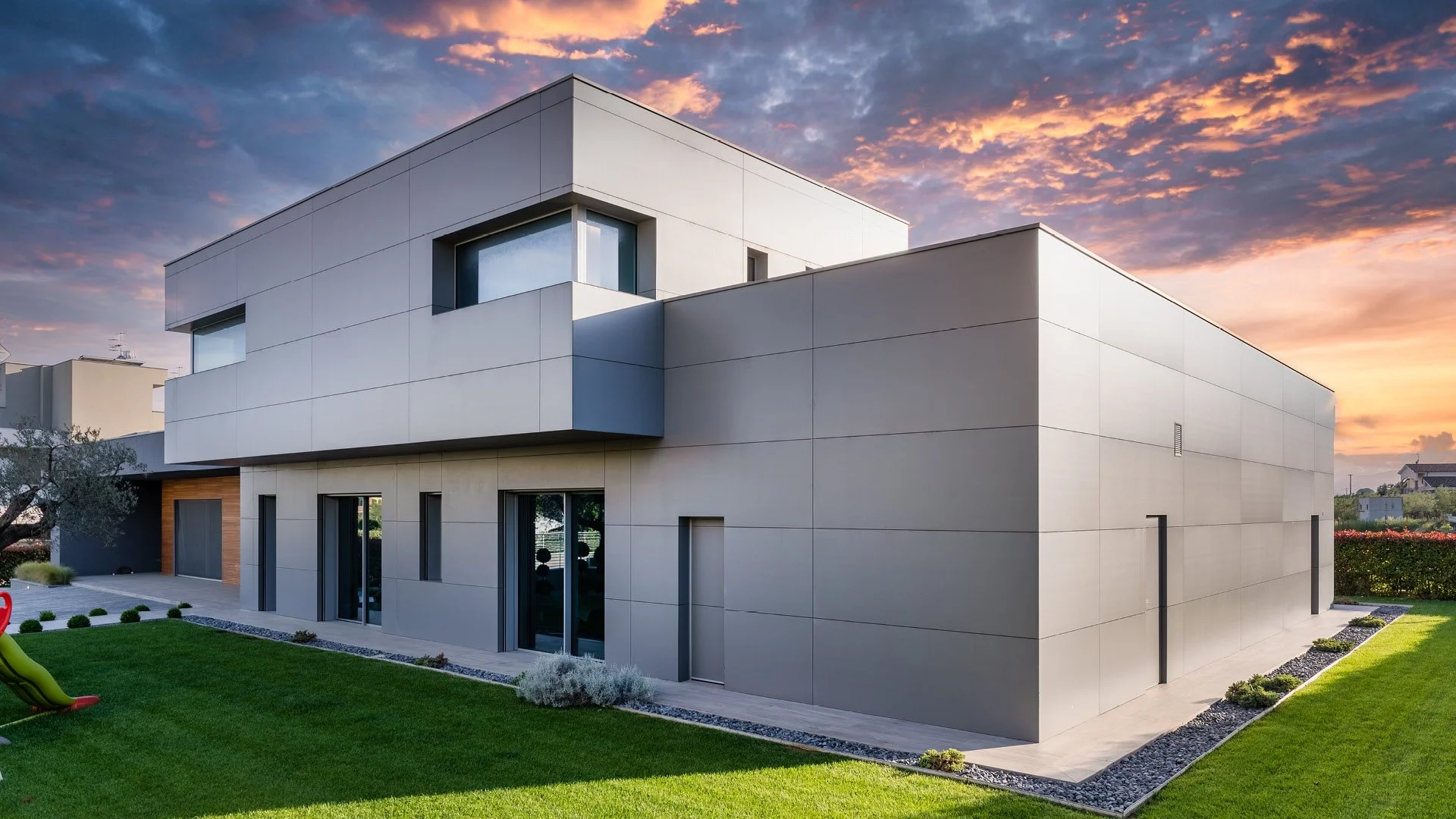
The Comprehensive Guide to Porcelain Slab Cladding: Engineering Interior and Exterior Excellence for Modern Construction
While porcelain has been used in small formats for centuries, the ability to manufacture massive, "gauged" slabs—often reaching dimensions of 1600mm x 3200mm—has opened new doors for the building envelope. These slabs offer a "skin" that can wrap a building's exterior with the strength of stone but the weight of glass, while simultaneously flowing through interior lobbies and high-traffic corridors to create a seamless, monolithic aesthetic.
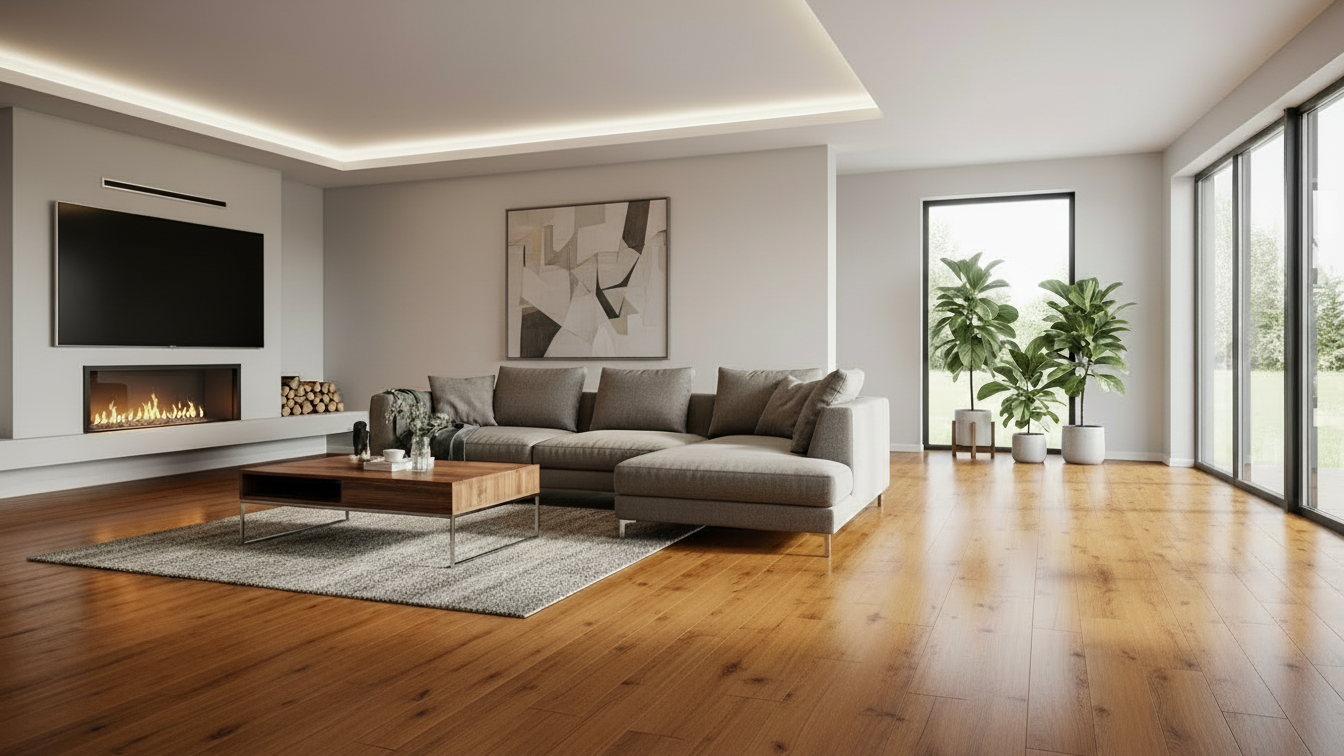
The Difference Between Solid Hardwood, Engineered Wood, Laminate, and Vinyl Flooring: A Builder’s Complete Material Guide
Choosing the right flooring material goes far beyond appearance. Solid hardwood, engineered wood, laminate, and vinyl flooring each perform differently depending on moisture, subfloor conditions, installation method, and long-term use. Understanding these differences is essential for builders, designers, and homeowners looking to make informed decisions that balance durability, aesthetics, and performance.
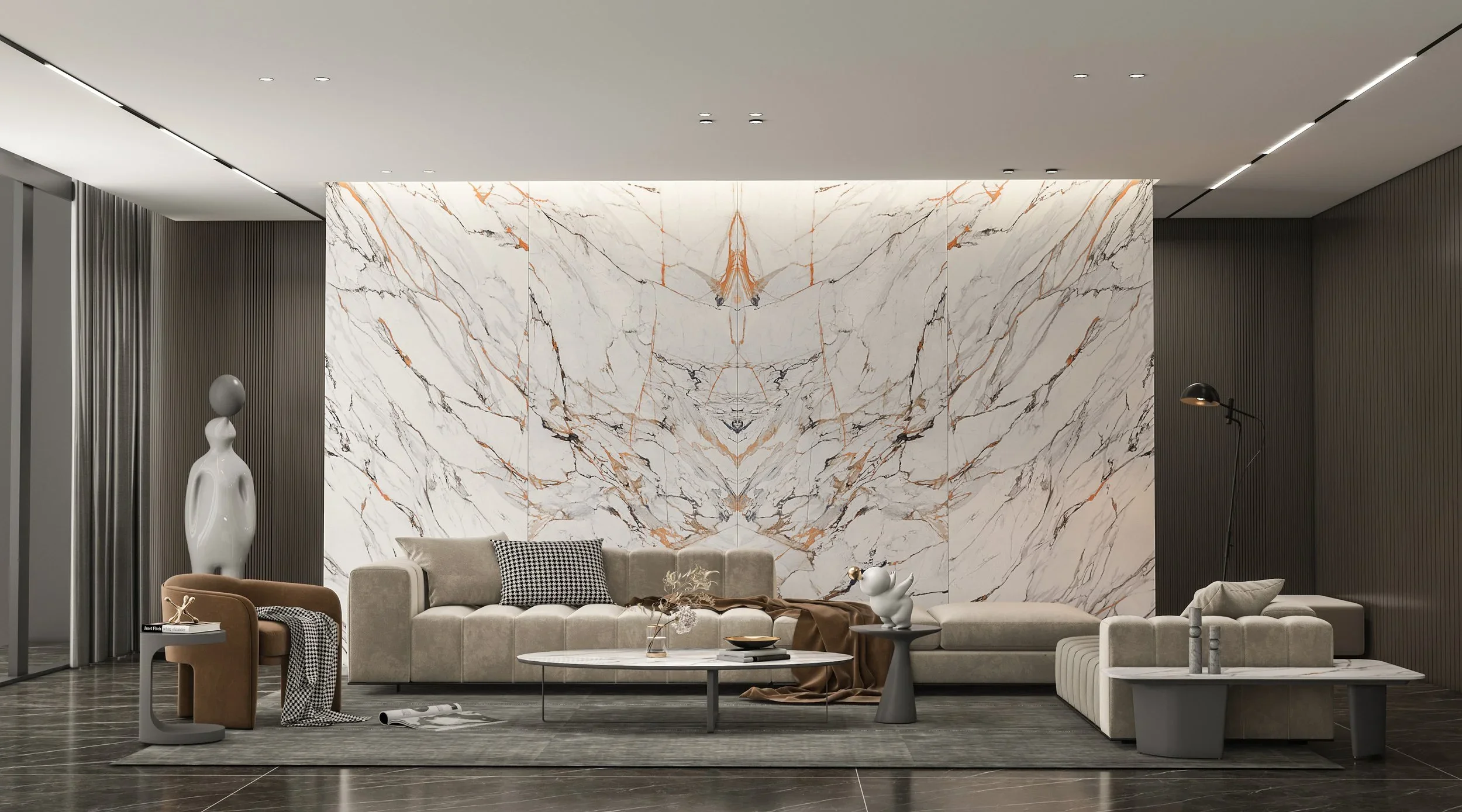
The Guide to Book-Matched Porcelain Slabs: Achieving Seamless Architectural Veining
The ultimate expression of luxury surface design is the book-matched pattern, where two adjacent slabs are mirrored to create stunning, seamless symmetry. Historically reserved for temperamental natural stone, this architectural grandeur is now revolutionized by porcelain slabs. Achieve a flawless, enduring focal point on feature walls, fireplace surrounds, or kitchen countertops, combining breathtaking aesthetics with unmatched durability.
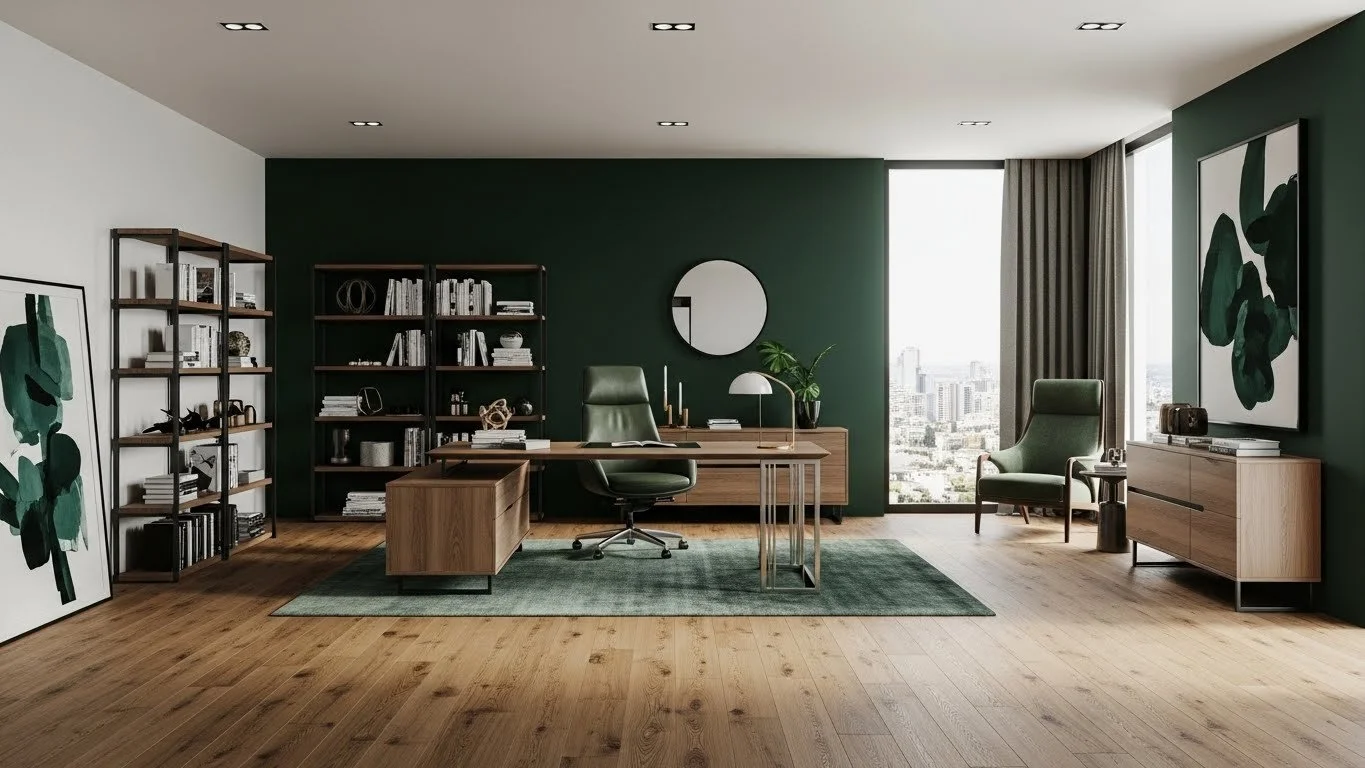
Radiant Heat & Hardwood: Best Practices for Installing Engineered Wood Over Hydronic Systems
The warmth of radiant floor heating paired with the beauty of hardwood is the peak of residential luxury. However, this combination is a technical challenge: concentrated heat accelerates wood movement, leading to warping and cracking if protocols are ignored. Success is only possible with engineered hardwood and absolute precision. Our definitive guide details the strict procedures necessary for a flawless, stable floor.
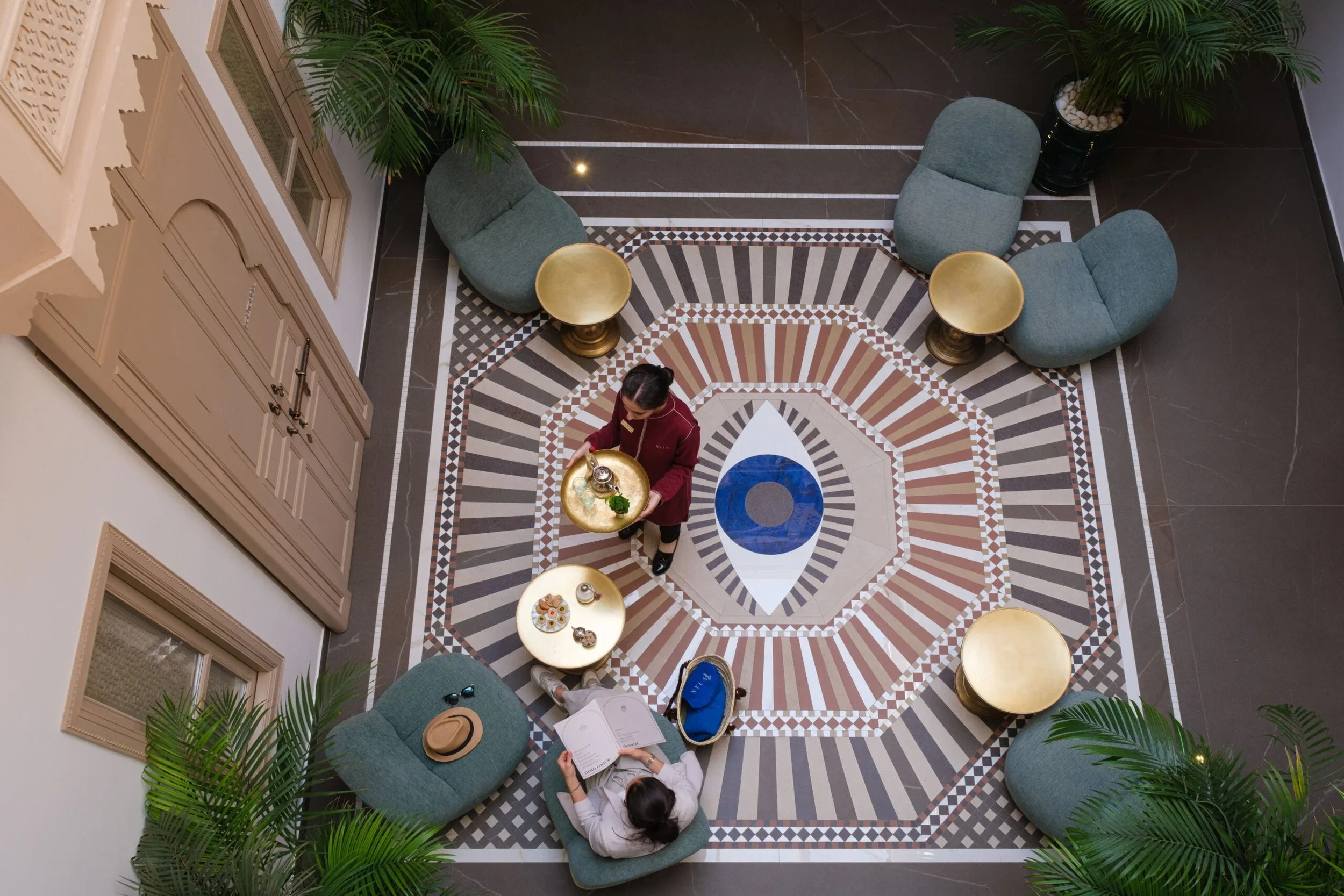
Laminam Porcelain Slabs | Superior Natural Surfaces for Kitchens, Bathrooms & Interiors
Laminam was founded in the early 2000s and has since revolutionized the porcelain slab industry with the introduction of large-format, ultra-thin slabs. Originally conceived as an R&D hub for developing and industrializing innovative ceramic & porcelain products, the company quickly evolved, identifying new applications across both traditional and emerging design sectors. Laminam now has showrooms across the world
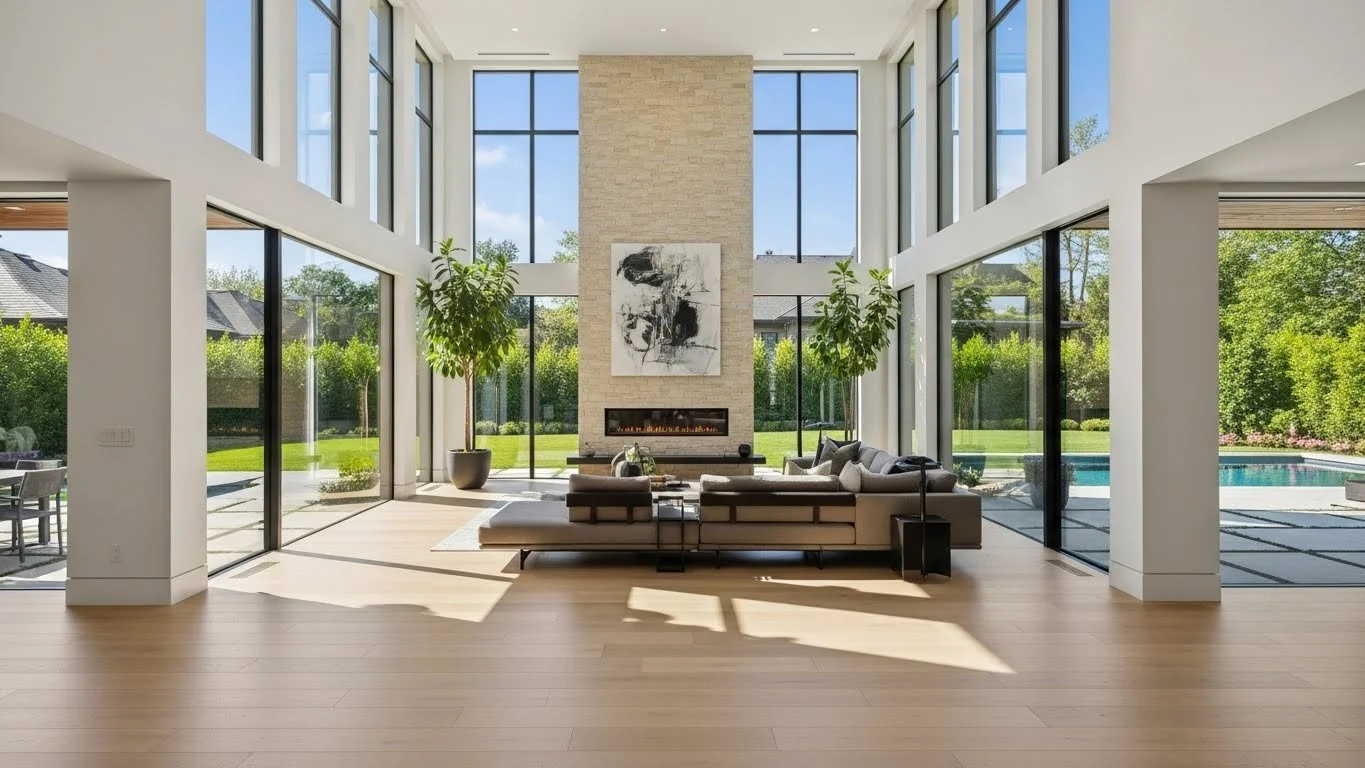
The Janka Hardness Scale Explained: Choosing the Right Wood Species for Durability and Dent Resistance
For architects, builders, and homeowners alike, understanding the Janka scale is the difference between a temporary aesthetic choice and a lifetime investment. Don't choose a floor based on color alone; choose a floor that is structurally matched to your life. Dive into our full guide to learn how to translate this essential number into the perfect, dent-resistant floor for every room in your home.
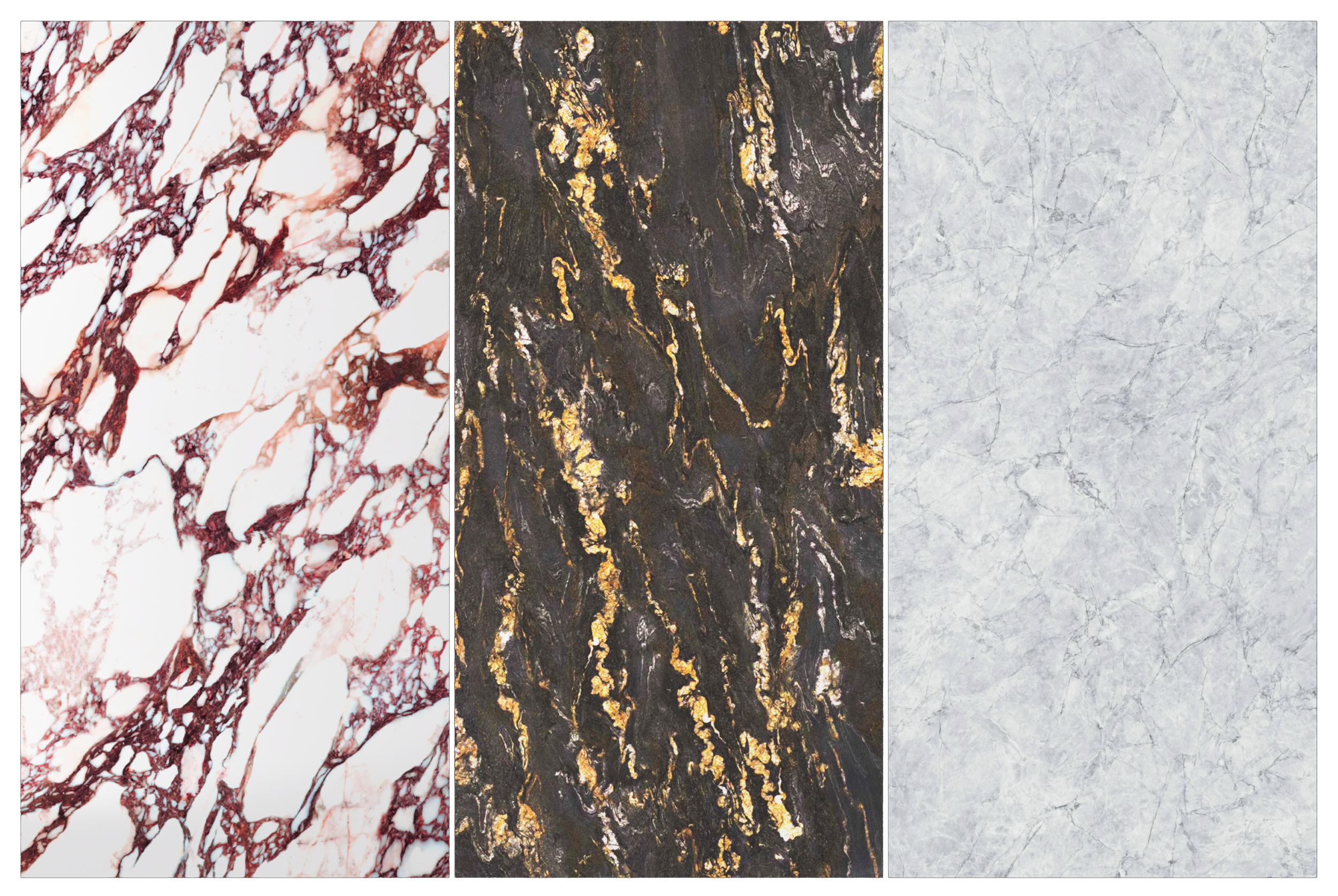
Porcelain Slab Sizes & Thicknesses: Choosing the Right Fit for Every Space
In contemporary architecture, porcelain slabs are more than just a surface material; they are a fundamental component that defines a space's identity. From sleek kitchen countertops to expansive feature walls, porcelain has become a cornerstone of modern design. However, achieving the perfect aesthetic and performance hinges on one critical decision: selecting the correct slab size and thickness for the intended application.
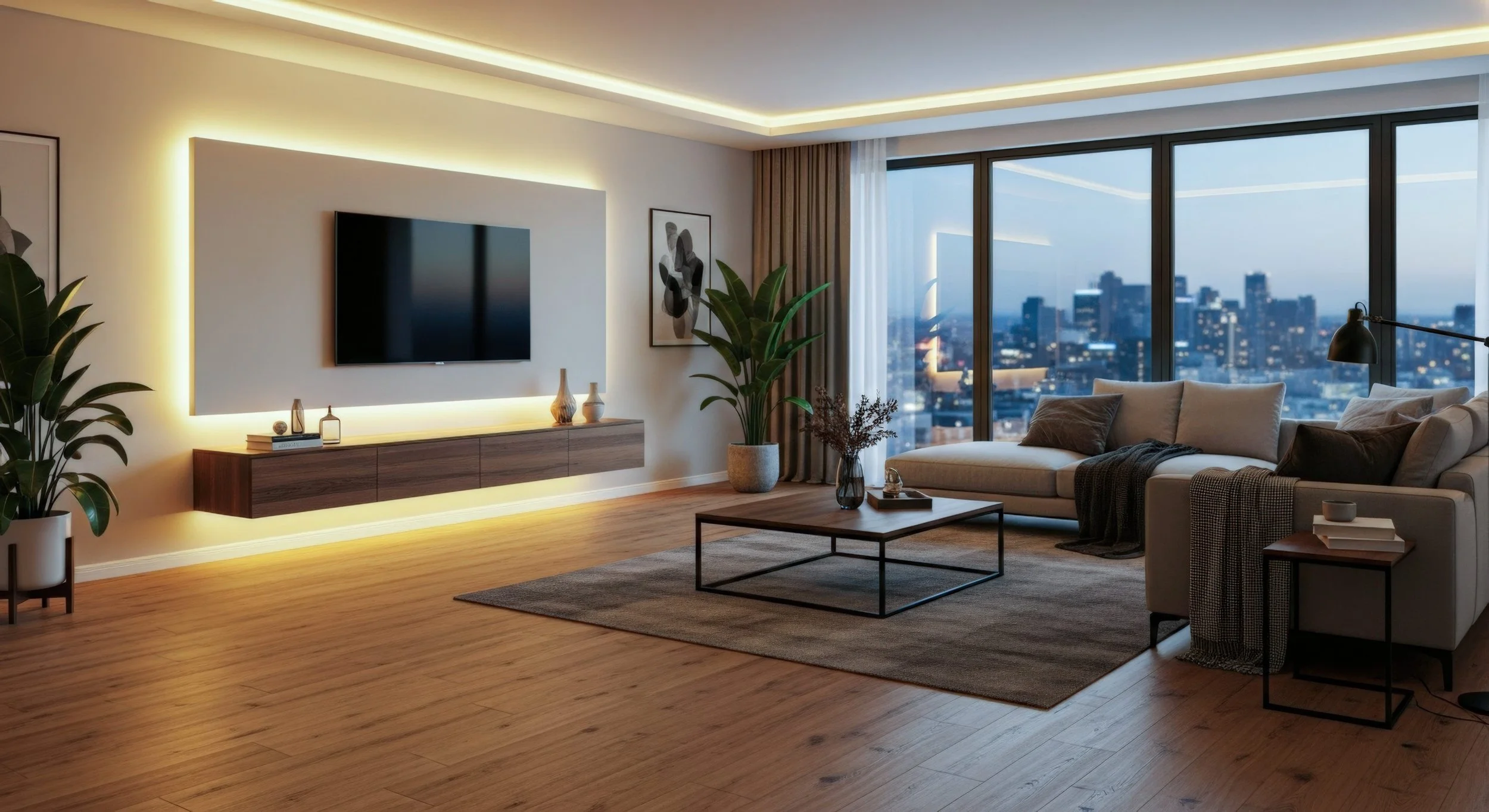
Using Flooring Textures to Affect Lighting and Mood
The finish of a porcelain tile or the grain of a wood plank dramatically alters how light interacts with the room, defining its visual and emotional mood. Every material either reflects or absorbs light. A polished or glossy porcelain finish mirrors light, amplifying brightness and making a room feel more open and energized . Conversely, matte or textured surfaces, like structured porcelain or wire-brushed wood, diffuse light, creating soft shadows, warmth, and a cozier, more intimate environment.